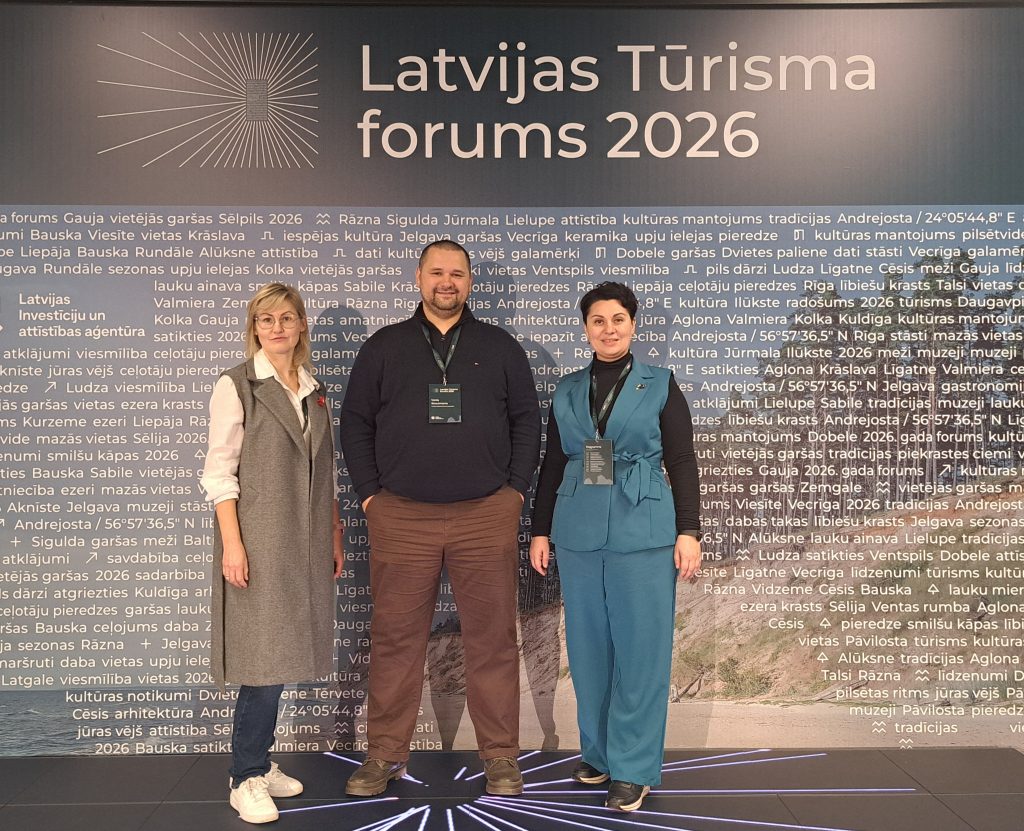
On 25 November 2026, academic staff and students of Riga Management College (RMK) participated in the Latvian Tourism Forum 2026, held at the ATTA Centre in Riga. Organised by the Investment and Development Agency of Latvia (LIAA), the event brought together tourism and hospitality professionals, entrepreneurs, researchers and representatives of educational institutions.
The forum’s motto, “Data. Experience. Action.”, highlighted the importance of data-driven decision-making, knowledge exchange and practical solutions in the development of the tourism industry.
During the forum, Latvian and international experts introduced participants to current tourism development trends, changing travel behaviour, digitalisation opportunities, sustainable resource management and solutions for enhancing the competitiveness of tourism businesses.
Development Trends in the Latvian Tourism Industry
Data presented by the Central Statistical Bureau of Latvia indicate that the Latvian tourism industry is gradually returning to pre-pandemic levels. The number of guests accommodated in tourist establishments reached 2.82 million in 2025, while the number of domestic guests increased by 27% compared to 2019.
The structure of international tourism markets is also changing. Particularly rapid growth has been observed in the Spanish market – the number of nights spent by Spanish visitors in Latvian tourist accommodation establishments increased by 171% in 2025 compared to 2022.
The importance of major international events in tourism development was also emphasised. For example, during the month of the Latvia–England football match, tourist accommodation establishments in Riga welcomed 11,600 guests from the United Kingdom – 78% more than in the corresponding month of the previous year.
Positive trends are also evident in businesses’ financial performance. The net profit of accommodation establishments quadrupled in 2025, reaching EUR 15 million, while 62% of restaurants operated profitably. At the same time, competitive remuneration and employee wellbeing remain important issues for the industry’s development.
Digitalisation and Future Competencies in the Tourism Industry
Particular attention was paid to the role of digital technologies and artificial intelligence in enhancing the competitiveness of tourism businesses. As information search and travel planning habits evolve, businesses need to focus increasingly on their visibility not only in traditional search engines but also in artificial intelligence tools.
Guest expectations regarding the use of technology in service delivery are also changing. A survey of forum participants revealed that the most common barriers to business digitalisation were limited budgets (29%), lack of staff time (23%), team resistance to change (16%) and uncertainty about where to start (16%).
Integrating Industry Trends into the Study Process
Participation in the Latvian Tourism Forum provided RMK academic staff and students with an opportunity to explore the latest industry trends, learn from the experiences of international experts and entrepreneurs, and expand their professional networks.
Riga Management College places great importance on keeping up with developments in the tourism and hospitality industry and the changing demands of the labour market, integrating them into the curriculum of the “Tourism Services Organisation” study programme.
Data analysis skills, digital competence, the use of artificial intelligence tools, sustainable thinking and the ability to understand changing customer needs are becoming increasingly important professional competencies for future tourism specialists.
The participation of RMK academic staff and students in such industry events strengthens the connection between academic studies and industry practice, contributing to the preparation of competitive professionals.